Strategy Mobilisation: sparking energy and progress

Strategy Mobilisation: sparking energy and progress
In fact, 90% of leaders admit that failure to deliver on strategy comes down not to the strategy itself, but to failure to implement well.
A huge proportion of briefs we get from clients are to help them activate their ‘brilliant-on-paper strategy’, picking up the work of the big strategy houses to get people properly behind the plan. In a way that means performance actually shifts.
When you do mobilise right – when every team really believes in the strategy and starts delivering it fast – strategy becomes the spark that lights a fire across the business, creating energy and progress.
Too few levers. Most business build a strategy and do some engagement. But there are many more levers to use – culture, leadership, systems and processes are all effective tools to convince (and keep convincing) the organisation that ‘we really mean it’.
Mobilising out of sequence. When to bring leaders into the strategy so they feel ownership for it (but don’t think they can rewrite it)? What’s the right moment to announce major process changes so that it creates credibility (not chaos)? There is an art to creating a change journey that is coherent, and allows momentum to grow instead of dissipate.
People are overstretched right now. To get everyone connected to the strategy, you have to win both their hearts and minds. But how?
We’ve recently been working with a large financial institution in APAC to get them aligned around the strategic shifts they need to make across the business. Before sharing any of the strategy and priorities, we gave teams time and space to engage with content that painted a rich picture of the organisation’s external operating context and constantly evolving competitive landscape. This built the emotional commitment to the need to change.
In a rush to get on to delivery, it’s rare that leaders step back and assess what the new strategy demands of the business. Or how people will engage with the plan and take in the information alongside everything going on around them.
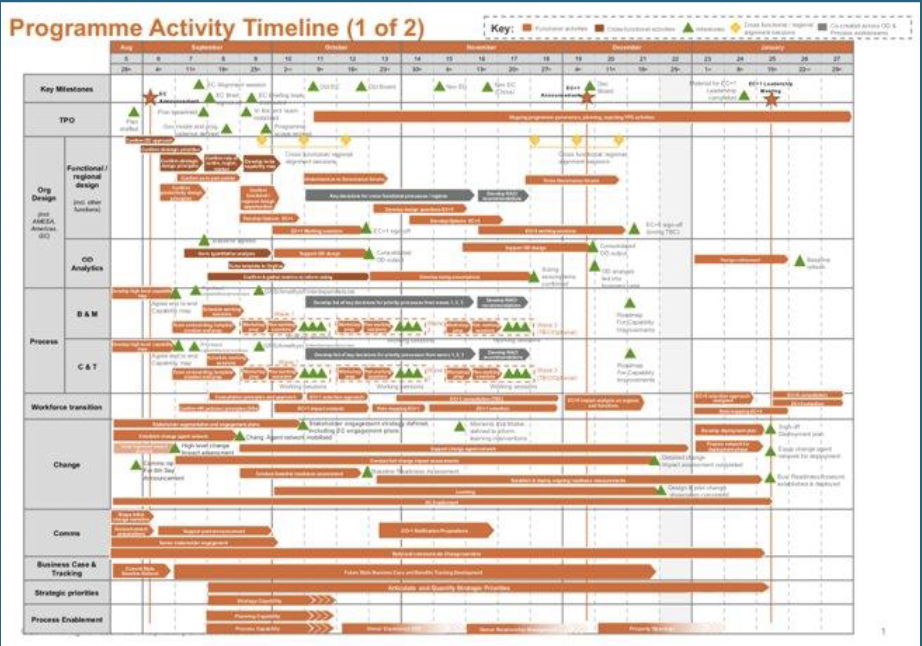
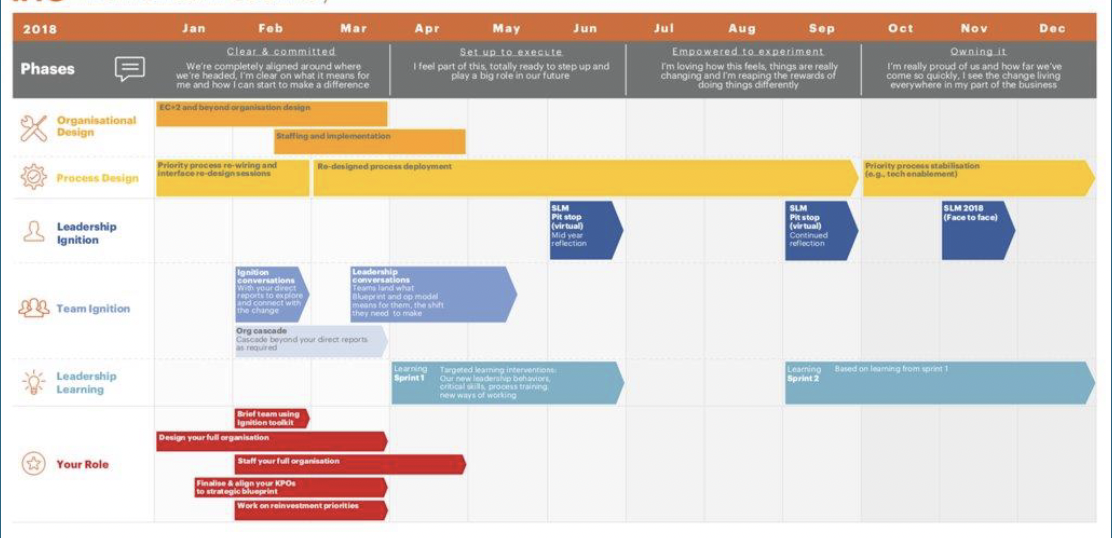
Creating a simple architecture and considering exactly how it will play out means you can design specific colleague journeys and enable execution throughout the organisation. We often start by taking a holistic view of everything that’s going on in the business through a human lens – to truly understand the impact on individuals across the business. Then re-shape the plan walking in colleagues’ shoes so that it is rigged for clarity and momentum.
From this...
To this...
Getting visible and even iconic proof points early on does two things.
They create a sense of progress toward your goals – even when your goal is far off – which drives belief in every team. Critically, just a few iconic actions can reinforce your messaging about the strategy and show ‘we really mean it’.
We’ve seen this show up in various different ways. One of our clients removed the ‘Executive floor’ in their office completely and turned the whole area into a collaboration zone. Another even banned PowerPoint as a communication tool to embed move fast and talk straight behaviours.
To find out more about where we’ve helped businesses mobilise, and how we could help your organisation, get in touch with theo.keane@businessfourzero.com
1 https://impact.economist.com/p...